What Happens When a Christmas Light Bulb Goes Out in December
Lit Up Taylor's Way • September 18, 2026 • 8 min read
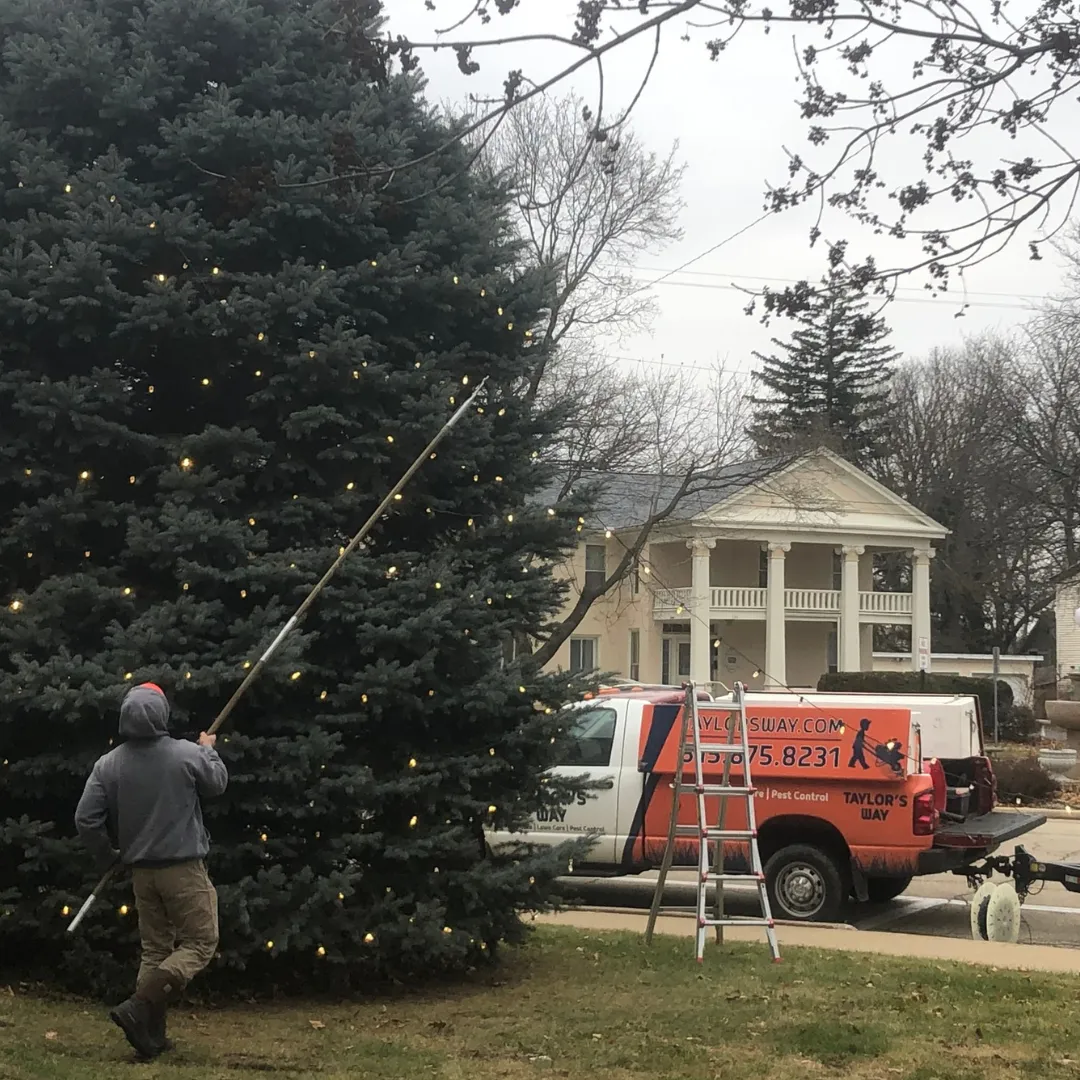
Somewhere around the tenth of December, it happens. You pull into the driveway after dark, look up at the roofline you have been enjoying for two weeks, and one section of the gable is out. Or a strand on the spruce has gone dark from the middle down. Or last night's wind has lifted a run off the porch roof and it is hanging in a loop.
What happens next is the whole difference between a display you hung yourself and one that was installed for you. This is what that phone call actually sets in motion.
First, why it happens at all
Lights fail for a small number of ordinary reasons, and none of them are anyone's fault. A bulb reaches the end of its life, which even commercial grade bulbs eventually do. A connection that was snug in October has worked a fraction loose after six weeks of wind. Ice loads a run and pulls a clip. A squirrel takes an interest in a wire. A power outage knocks the timer off its schedule so the display comes on at the wrong hour or not at all.
Professional product and a careful install make all of these rarer. Custom fit strands do not have slack for wind to work on. Commercial grade connections tolerate cold. Clips are placed where the load is spread rather than where it was convenient. But rarer is not never, and a season is long. What matters is what happens when something does go.
The phone call
You call 815-875-8231 or send a note through the website and tell us what you see. That is the entire job on your end. You do not need to diagnose it, you do not need to find the plug, and you absolutely do not need to get the ladder out to have a closer look. "The left gable is dark" or "the tree went out halfway down" is all the crew needs.
It helps to say roughly when you noticed it and whether there was weather the night before, because that points the crew toward the likely cause before they arrive. But it is not required. They will find it.
What the crew does when they arrive
The visit has three parts, and only the first is the one you called about.
Fix the reported problem. A dark bulb is replaced. A dark section is traced to the failed connection or bulb and restored. A loose run is re-clipped and re-tensioned so it sits the way it did on install day. Storm damage is repaired or the affected strand is swapped for a fresh one from the truck.
Check everything else. Whatever caused the problem you saw may have touched parts of the display you cannot see from the driveway. If wind pulled one run, the crew walks the rest of the roofline looking for clips that have started to lift. If a bulb failed, they look for others in the same run that are dimming. The goal is that you do not have to call again next week about the section beside it.
Confirm the timer. If a power outage was involved, or if the display has simply been behaving oddly, the schedule is reset and confirmed before the crew leaves. The display should come on that evening at the time you chose, exactly as before.
How quickly it happens
December is the busiest month of the year for a lighting company, and the honest answer is that the crew is scheduling maintenance calls around installs right up until the last install of the season. Most calls are handled within a few days, and something visible and serious, like a run hanging loose or a whole side of a house dark, moves to the front of the line.
Two things help. Calling as soon as you notice, rather than waiting a week to see if it fixes itself, gets you into the queue earlier. And a display installed early in the season has usually had its small settling issues sorted out in November, when the schedule is lighter, rather than discovering them in the crush of mid December.
What it costs
Maintenance through the season is included in the price of every full service display. There is no call out fee and no charge for the replacement bulb or strand. The price you agreed at the consultation covers the design, the installation, the timer, the maintenance visits and the removal and storage in January. You are not deciding whether a dark gable is worth paying to fix. You are just calling.
The reason it is included rather than sold separately is simple: a display that is allowed to degrade through December is not the display you paid for. The value is in the house looking right every night of the season, and that is not possible without someone on call to keep it that way.
What you should not do
It is worth saying plainly. Do not get on the roof. Do not climb a ladder to a gable in December weather to look at a bulb. Do not pull on a loose strand to see if it comes free. Do not open the timer housing to try to reset it. Every one of those is either dangerous or likely to turn a small problem into a bigger one, and every one of them is exactly what the maintenance visit exists to spare you.
The one useful thing you can do from the ground is look. Note which section is affected, whether the whole display is off or just part of it, and whether the lights are behaving strangely at switch on. Then call.
Small things that are not problems
Not everything you notice needs a visit, and it helps to know the difference. A single bulb that is a shade dimmer than its neighbors is normal variation and will not spread. A run that takes a second to come up to full brightness at switch on is the timer and the cold doing what they do. Frost on the bulbs in the morning is just frost. Snow sitting on a roofline run will melt or blow off, and the lights underneath are built for it.
What does need a call is anything dark, anything hanging, anything flickering steadily rather than once at switch on, and anything that has changed since the night before. If you are not sure, call anyway. It is far better for the crew to tell you a display is fine than for a small fault to sit unreported until it becomes a dark gable.
The storm scenario
Illinois winters bring ice storms and hard wind, and after a bad night it is normal to wonder what the roof looks like. If you can see damage, call and say so. If you cannot see any but the weather was severe, it is still worth a quick look at dusk that evening to make sure everything comes on as it should. A display that survives an ice storm intact is a good sign that the install was done properly, and most do.
If a storm has caused a power outage, expect the timer to need attention. The lights may come on late, early, or not at all the first night after the power returns. That is a five minute reset for the crew and one of the most common maintenance calls of the season.
Why this is the part people remember
Ask homeowners why they went back to a professional service for a second year and very few of them talk about install day. They talk about the night in December when something went wrong and it was fixed without them lifting a finger. The design and the install are what you see in the photos. The maintenance is what you feel through the season.
It is also what separates a display that looks good on the first night from one that still looks good on Christmas Eve. Every do it yourself roofline in the neighborhood is a little worse in the last week of December than it was in the first. The professional one is not, and that is the difference a single phone call makes.
What to Do Next
If you have a Lit Up Taylor's Way display and something is not right, call 815-875-8231 and tell us what you see. If you are still deciding whether to book, this is one of the things to weigh. The price covers the season, not just the day the lights go up.
Lit Up Taylor's Way designs, installs, maintains and removes holiday lighting across Princeton, Peru, LaSalle, Ottawa, Mendota, Kewanee, Dixon, Peoria and the surrounding communities. Full service displays start at $899 and the design consultation is free.