How to Get Your Home Ready for Christmas Light Install Day
Lit Up Taylor's Way • September 18, 2026 • 7 min read
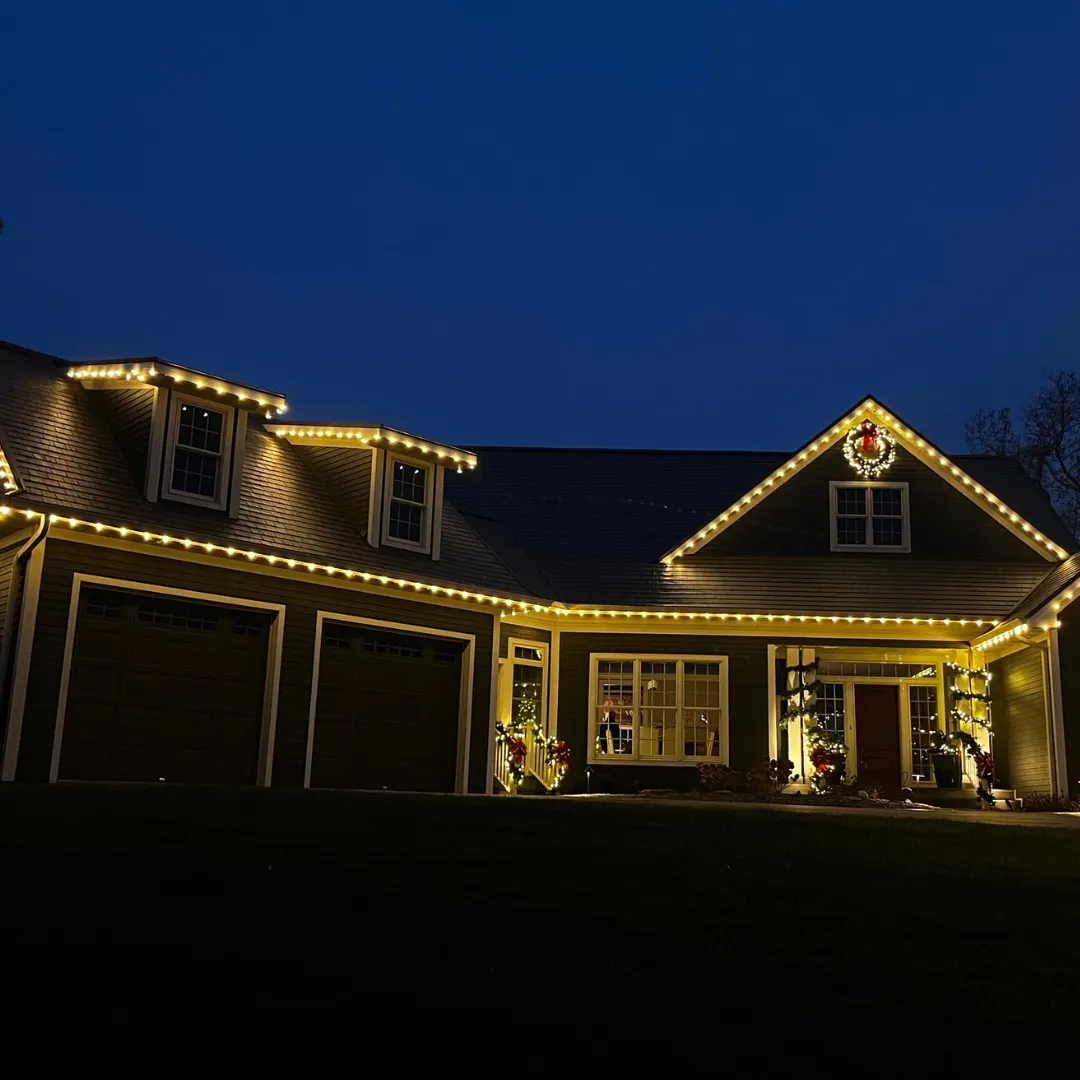
Most of the work of a professional display happens before the truck arrives. The design was settled at the consultation, the strands were built to your measurements, and the crew knows exactly which runs go where. Install day itself is the crew putting a known plan on a known house, and it usually takes a single visit.
That said, a handful of small things on your side make the day faster, cleaner and less likely to need a second trip. None of them take long. Here is the list.
The week before
Test the outdoor outlets. Plug something into every exterior outlet the plan relies on and make sure it works. Outdoor outlets are on ground fault protected circuits, and one that has tripped over the summer will look fine and deliver nothing. If an outlet is dead and the reset button does not bring it back, call an electrician before install day, not after. The crew cannot fix your wiring, and a dead outlet can mean a run that cannot be lit until it is.
Know where your breaker panel is. If a circuit trips during testing the crew may ask you where it is. You do not need to do anything with it; just be able to point.
Clear the gutters if they need it. Roofline clips sit on the shingle edge or the gutter lip. Gutters full of leaves do not stop the install, but they make the work slower and messier, and a fall gutter clean is worth doing anyway before winter.
Look at your trees. If a tree in the plan has a dead limb, a low branch over the driveway or anything you have been meaning to have pruned, do it before the lights go on it rather than after. A branch that comes down in January takes a strand with it.
The day before
Clear the ground under the roofline. Ladders need to stand on firm, level ground close to the house. Move planters, furniture, grills, hoses and anything else that sits along the foundation on the sides being lit. Fold in umbrellas. If there are beds along the front, the crew will work around plants, but stepping stones or garden ornaments that could be knocked are better moved.
Clear the driveway. The truck carries ladders, poles and your strands, and it needs to be close. Park on the street or in the garage for the day if you can.
Unlock gates and side yards. If the plan includes a tree in the back, a side elevation or a fenced yard, the crew needs to get there without hunting for you. Unlock the gate the night before or leave a note about how to open it.
Take down anything you have already hung. If you have put up a wreath, a garland or a strand of your own where the plan puts something else, take it down. The crew will not remove your decorations, and working around them slows things and risks damage to your things.
The morning of
Keep pets inside. Gates will be open, ladders will be moving and cords will be on the ground. A friendly dog is a tripping hazard for someone on a ladder, and an anxious one is a distraction. Inside, or with a neighbor, for the few hours the crew is there.
Be reachable. You do not need to be home, and most customers are not. But a phone number that answers is useful if something unexpected comes up, like an outlet that turns out to be dead or a tree that has grown enough to change the plan. A five minute call can save a return visit.
Know your timer schedule. It was chosen at the consultation, but if you have changed your mind about when the lights should come on and off, say so before the crew sets it. Dusk to ten or eleven is the most common choice for homes. The crew will set whatever you want, and it can be changed later, but it is simplest to get right the first time.
What the crew handles
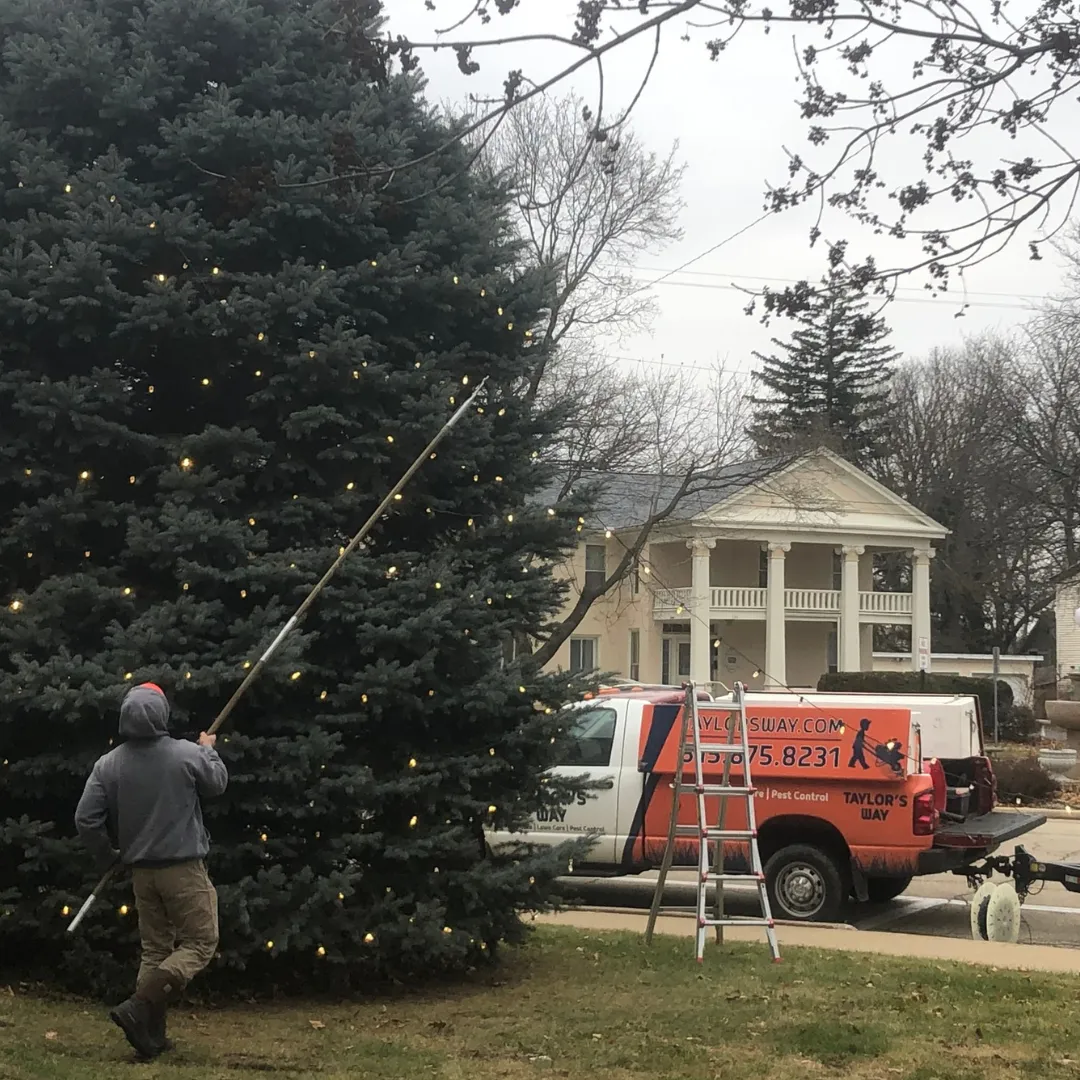
Everything else. The strands arrive already cut to your roofline from the measurements taken at the consultation, so nobody is guessing lengths on the lawn. Clips go on the shingle edge or gutter, not nails or staples, so nothing is left in the house in January. Trees are wrapped with long poles from the ground wherever possible, which is safer and gives a more even result than climbing. Runs are tested before the ladders come down. Cords across the lawn are placed where they will not be walked on or found by a mower. The timer is set to your schedule before the truck leaves.
The crew is licensed, insured and trained for exactly this work, and the tidying up is part of it: clippings, packaging and anything else that came off the truck goes back on it.
What you will notice that evening
The lights come on at the time you chose, and the house looks right. That is the whole experience of install day for most families. If anything about the result surprises you, a run that reads differently from the road than you expected, a tree that looks brighter or dimmer than its neighbor, say so straight away. Small adjustments are easiest in the first days, when the crew is still in the area and the schedule is lighter than it will be in December.
If the weather turns
Install is roof and ladder work, and ice, high wind or heavy rain can move a visit by a day or two. The crew will let you know. A weather delay is a sign the install is being done properly rather than rushed, and because the display is on a timer with a switch on date you chose, a short delay in October or early November changes nothing about when the house actually lights up.
Older homes and awkward houses
If your home has fragile trim, a slate or tile roof, ornate fascia or a roofline the crew flagged at the consultation, the plan already accounts for it, and the crew will have discussed with you how those areas are being handled. What helps on the day is a reminder of anything you know about the house that they might not: a soft spot in a porch roof, a gutter that pulls away when leaned on, a section of siding that is loose. Nobody knows an old house like the person who lives in it, and one sentence from you can save a repair.
Snow and ice are the other consideration. Installs are scheduled for the mild part of the season precisely so the crew is not clipping strands to a frosted eave. If an early storm has left the roof icy on your install morning, expect the visit to move rather than proceed.
Common things that cause a second visit
A dead outlet that nobody tested. A locked gate. A car in the driveway. A tree the homeowner assumed was in the plan but was not discussed. Decorations already hung where a run needs to go. Every one of these is avoidable with the list above, and every one of them is a genuine nuisance in a season when the calendar is full and a return trip may be a week or more away.
Questions to ask before the crew leaves
If you are home, three questions are worth a minute. Where is the timer and what is it set to. Which outlets is the display running from, so nothing else gets plugged into them and trips a circuit. And who to call if something goes dark, which is 815-875-8231, the same number for everything through the season.
What to Do Next
Put the list on the fridge a week before your install date and work through it. If you do not have an install date yet, book the consultation. It is free, it produces a plan and a price, and the earlier it happens the better the week you get. Full service displays start at $899 and include design, installation, a timer, maintenance through the season, and removal and storage in January.
Lit Up Taylor's Way designs, installs, maintains and removes holiday lighting across Princeton, Peru, LaSalle, Ottawa, Mendota, Kewanee, Dixon, Peoria and the surrounding communities. Call 815-875-8231 or request your free consultation through the website.