Timers and Automation: A Christmas Display That Runs Itself
Lit Up Taylor's Way • September 18, 2026 • 8 min read
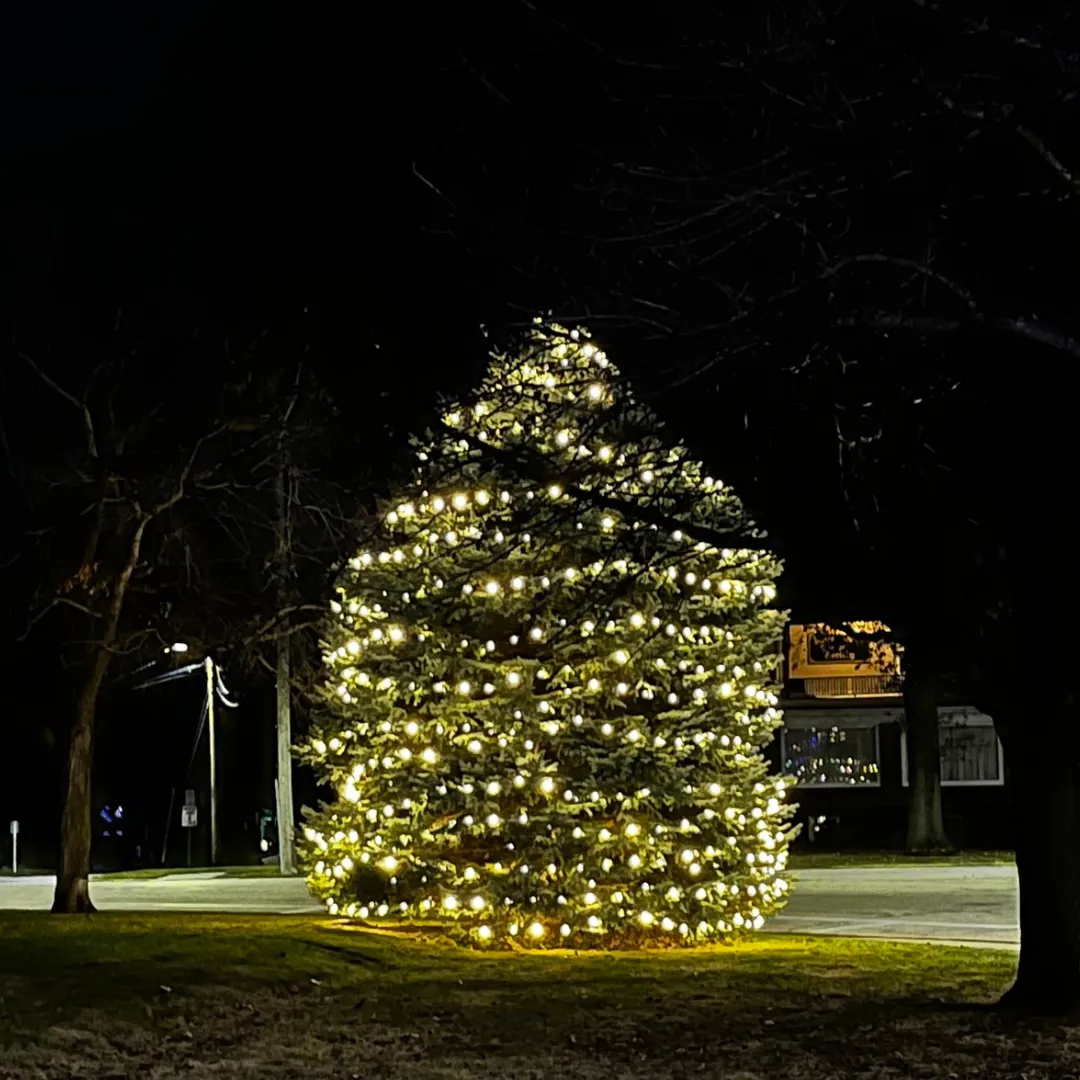
Ask anyone who has hung their own lights what the worst part was, and they will talk about the ladder. Ask them what the most annoying part was, and it is something smaller: remembering to turn the lights on. Coming home to a dark house at six. Realizing at midnight they are still blazing. Fishing behind a shrub in the cold for a plug.
A timer removes that chore completely, which is why it is not an optional extra on a professional installation. It is part of the job. Here is how it works and how to think about the schedule.
What "set to your schedule" actually means
When the crew finishes the install, the last thing they do before they leave is set the timer to the schedule you chose at the consultation. From that moment the display runs itself. On at the time you picked, off at the time you picked, every evening, whether you are home or not. You do not flip a switch. You do not check a plug. If you are away for a week in December, the house is lit every night you are gone.
That is the whole promise, and it sounds small until you have lived a season with it. The display becomes part of the house rather than a task on the list.
Choosing the schedule
There is no single right answer, but there are patterns that work.
Dusk to bedtime is the most common choice for homes. The lights come on as the sky goes dark and switch off at ten or eleven, after the last car has come home and before the neighbors' bedrooms are trying to sleep. It covers every hour anyone is likely to see the display and none of the hours nobody is.
Dusk to dawn suits homes on busy roads, corner lots, and anyone who leaves early for work and wants the house lit as they pull out. It also suits commercial buildings and storefronts, where the display is doing its job for passing traffic all night.
A morning window is worth considering if the household is up before daylight. Lights that come back on at five or six in the morning for an hour or two make a dark December morning considerably more pleasant, and the cost is negligible.
Whichever you choose, consistency matters more than length. A display that is reliably on every evening at the same time looks cared for. One that is on some nights and dark on others looks abandoned, even if the total hours are the same.
Why the lights go up before they come on
This surprises people the first time. Installations often happen in October and early November, and the lights sit dark for weeks. That is the timer doing its job in reverse. The install is done in mild, dry, safe weather. The switch on happens when you want it, which for most families is Thanksgiving weekend. Nothing about the display has to be timed to the calendar except the moment it first turns on, and that is a setting, not a ladder.
It is also why booking early produces a better result. A crew working a dry October afternoon does cleaner work than one working an icy afternoon in late November, and the timer means the early install costs you nothing in terms of when the house actually lights up.
Dusk moves, and the schedule should too
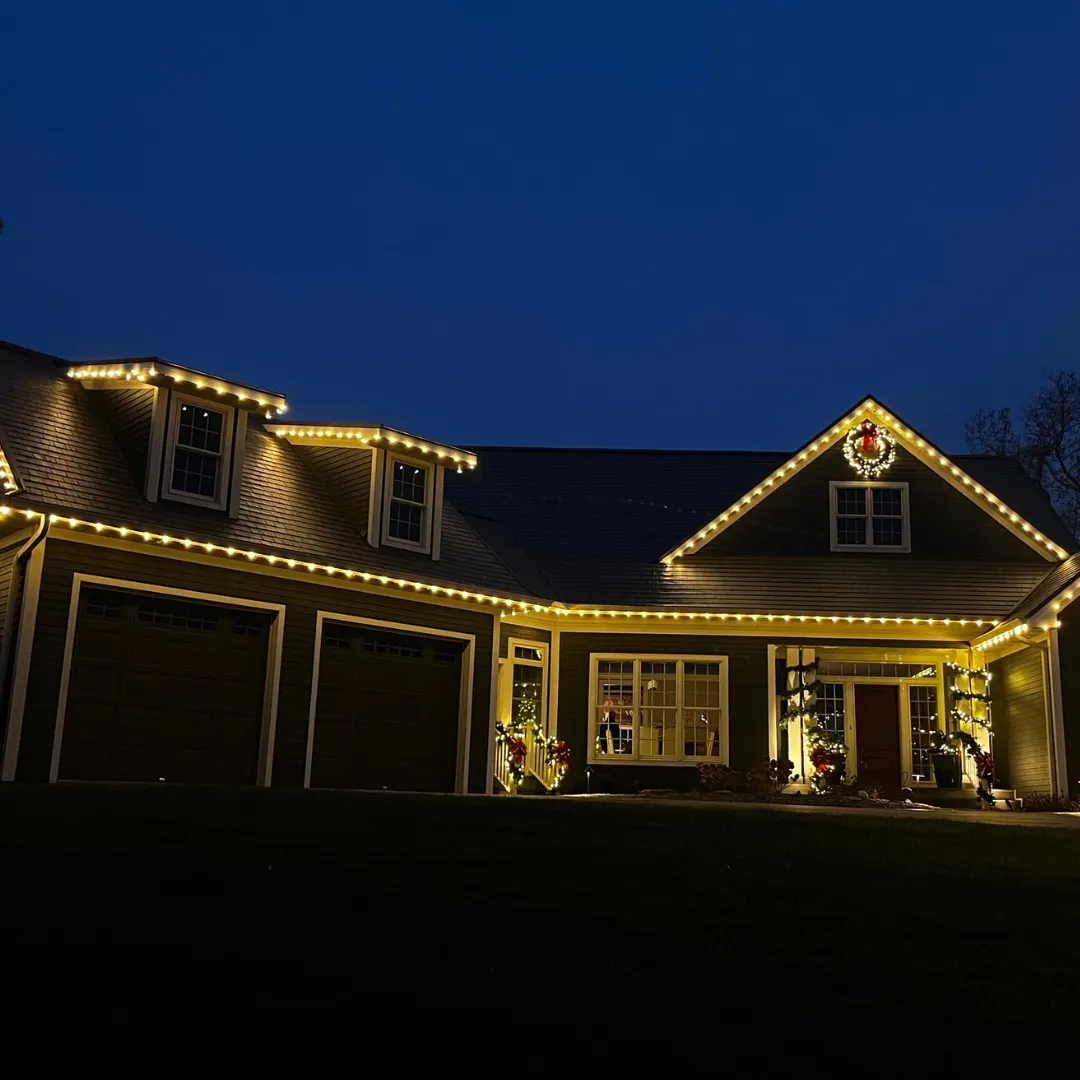
Sunset in north central Illinois is around a quarter to five at the start of November and closer to half past four by the middle of December. A display set to come on at a fixed clock time in October is coming on in daylight by Thanksgiving, which wastes the first half hour of every evening and looks slightly odd from the road. The better arrangement is a dusk based switch on, so the lights follow the sky rather than the clock, with a fixed switch off at the hour you chose.
If your display is set to a fixed time and you notice it is on while the sky is still light, or dark while the neighbors are already lit, say so. Nudging the schedule is a small adjustment and part of keeping the display looking intentional through the whole season.
Neighbors, sleep and light spill
The switch off time is a courtesy as much as a preference. Warm white along a roofline is gentle, but a lit tree in a front yard can throw a surprising amount of light into a bedroom across the street. Ten or eleven o'clock keeps the display up for every hour anyone is likely to be admiring it and takes it down before it is keeping anyone awake.
Bedrooms in your own house matter too. If a child's window sits under a lit gable, an earlier switch off on that circuit or a slightly dimmer bulb on that run is an easy fix, and it is the kind of thing worth mentioning at the consultation rather than discovering in December.
The planning behind the timer
A timer is only as reliable as the power behind it. Part of the design consultation is working out where the outlets are, how many circuits are available, and how the runs should be divided so that no single circuit is carrying more than it should. A display that trips a breaker on the coldest night of December is not bad luck. It is a planning failure, and it gets prevented on the front lawn in September.
The timer itself needs a home that is protected from weather and reachable if it ever needs attention. Where it goes is decided at the consultation too. None of this is something you need to think about, but it is worth knowing that it was thought about.
Storms, outages and the one call
Illinois winters interrupt power. When they do, a timer can lose its schedule, and a display that was running perfectly can come back on at the wrong time or not at all. This is exactly the kind of thing the maintenance side of the service exists for. One call, and the crew comes out to reset it and to check that the storm that caused the outage has not loosened anything else. You do not touch a thing.
The same goes for the more ordinary failures. A strand goes dark, a run comes loose in wind, a bulb fails in a visible spot. None of those are timer problems, but they are all the same phone call, and the point of the service is that the display stays whole for the whole season rather than looking its best only on install day.
What automation does not do
It is worth being clear about the limits. A timer turns the display on and off. It does not detect a failed strand, it does not fix a loose run, and it does not know that Christmas Eve is a night you might like the lights on later. Those are human decisions and human visits, which is why maintenance is part of the same package rather than a separate purchase.
If you know you want a different schedule on particular nights, say so at the consultation or at any point in the season. Adjusting the timer is a small job, and it is far better to ask than to go out in the cold and try to override it yourself.
The end of the season
In January the crew comes back, the display comes down, and the timer's job is finished for the year. Everything is taken down and stored safely until next season, so there is nothing left on the house to remember, unplug, or find in a tub next November. The schedule you chose is on file with the rest of your plan, ready to be reviewed or reused when you rebook.
What it costs
Nothing beyond the installation. The timer and the schedule are part of every full service display, which start at $899 and include the design consultation, installation, maintenance through the season, and removal and storage in January. The only decision you make is when you want the house to light up.
What to Do Next
Think about your evenings. When does the household come home, when do the neighbors turn in, and would a lit house on a dark December morning be welcome? Bring those answers to the consultation and the schedule will be set before the crew ever leaves your driveway.
Lit Up Taylor's Way designs, installs, maintains and removes holiday lighting across Princeton, Peru, LaSalle, Ottawa, Mendota, Kewanee, Dixon, Peoria and the surrounding communities. Call 815-875-8231 or request your free consultation through the website.