Holiday Lighting for Storefronts, Churches and Main Street Buildings
Lit Up Taylor's Way • September 18, 2026 • 8 min read
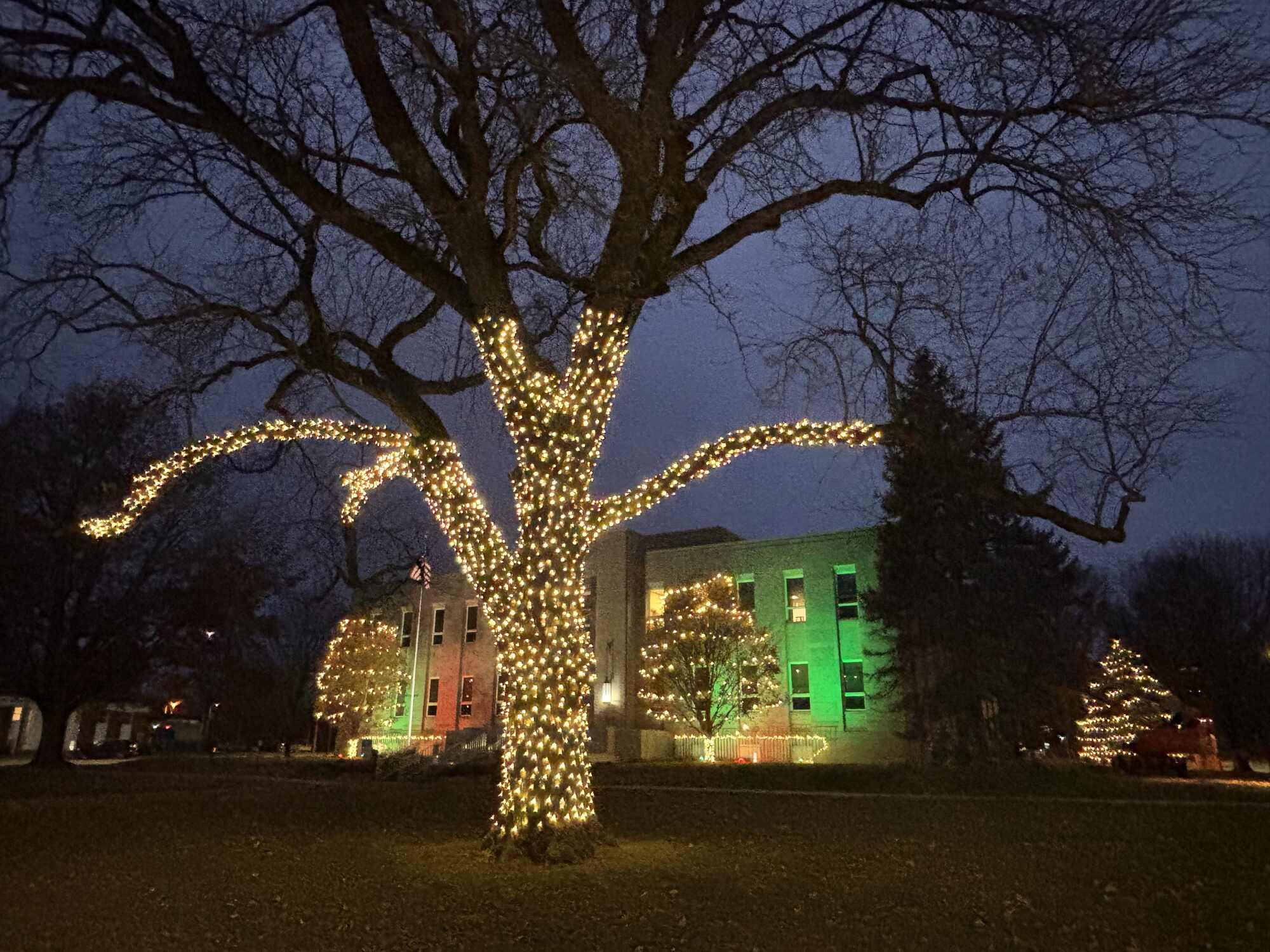
Drive down Main Street in Princeton or through downtown Peru in December and you can tell, without reading a single sign, which businesses are open and glad to see you. It is the light. A storefront with a warm outline and a lit tree out front reads as welcoming from a block away. The one beside it, dark, reads as closed even when it is not.
Commercial holiday lighting is a different discipline from lighting a home. The building is bigger, the audience is larger, the hours are longer and the display has an actual job. Here is how to think about it.
What a commercial display is for
A home display is for the family and the neighbors. A commercial display is for everyone who passes, and it is doing three things at once. It says the business is open and active through the season. It makes the block feel safer and more pleasant after dark, which brings people downtown in the first place. And it marks the building as one that is cared for, which is the impression every retailer, restaurant, church and office wants to give.
None of that requires the display to be elaborate. It requires it to be visible, consistent and well kept. A single clean line of warm white along a storefront cornice, on every night of the season without fail, does more than an ambitious display that is half dark by the second week of December.
Scale changes the design
Buildings on Main Street are taller and wider than houses, and they are seen from farther away. Details that carry a home display, a wreath on the door, a lit shrub by the step, disappear at that distance. Commercial work is about bigger gestures.
The cornice and the roofline. Most downtown buildings have a strong horizontal line at the top of the facade. Lighting it draws the whole building in one stroke and ties a row of neighboring storefronts into a single street. If several businesses on a block do it in the same warm white, the effect from the end of the street is remarkable.
Trees and planters. Street trees, parking lot trees and the evergreens beside a church entry are the other big gesture. A wrapped trunk and lit canopy on a mature tree is visible from the far end of a block and photographs beautifully, which matters more for a business than for a home. Planters with lit evergreens carry the display down to sidewalk level where people actually walk.
Washing walls with color. Large flat masonry, a church tower, the side of a civic building: these take colored uplighting better than strands. A brick wall washed in red or green, with a warm white wrapped tree in front of it, gives a building presence without a single bulb on the facade. The photograph at the top of this article is exactly that approach.
Churches
Churches are among the most rewarding buildings to light and among the easiest to get wrong. The temptation is to outline everything, and the result is a rectangle of dots that flattens the architecture. The better approach is to pick the two or three features that define the building, usually the tower or steeple, the main entrance and any large evergreen on the grounds, and light those with restraint. A steeple picked out in warm white is visible across town. The entrance lit and lined with garland is what welcomes people to a late service. A wrapped tree gives the grounds depth.
Churches also have a schedule that matters. Advent services, Christmas Eve, concerts and community events all happen after dark, and the display should be on for all of them. A dusk to dawn schedule or a dusk to midnight schedule with an extension on event nights is the usual answer, and it is set once at the consultation.
Civic buildings, parks and districts
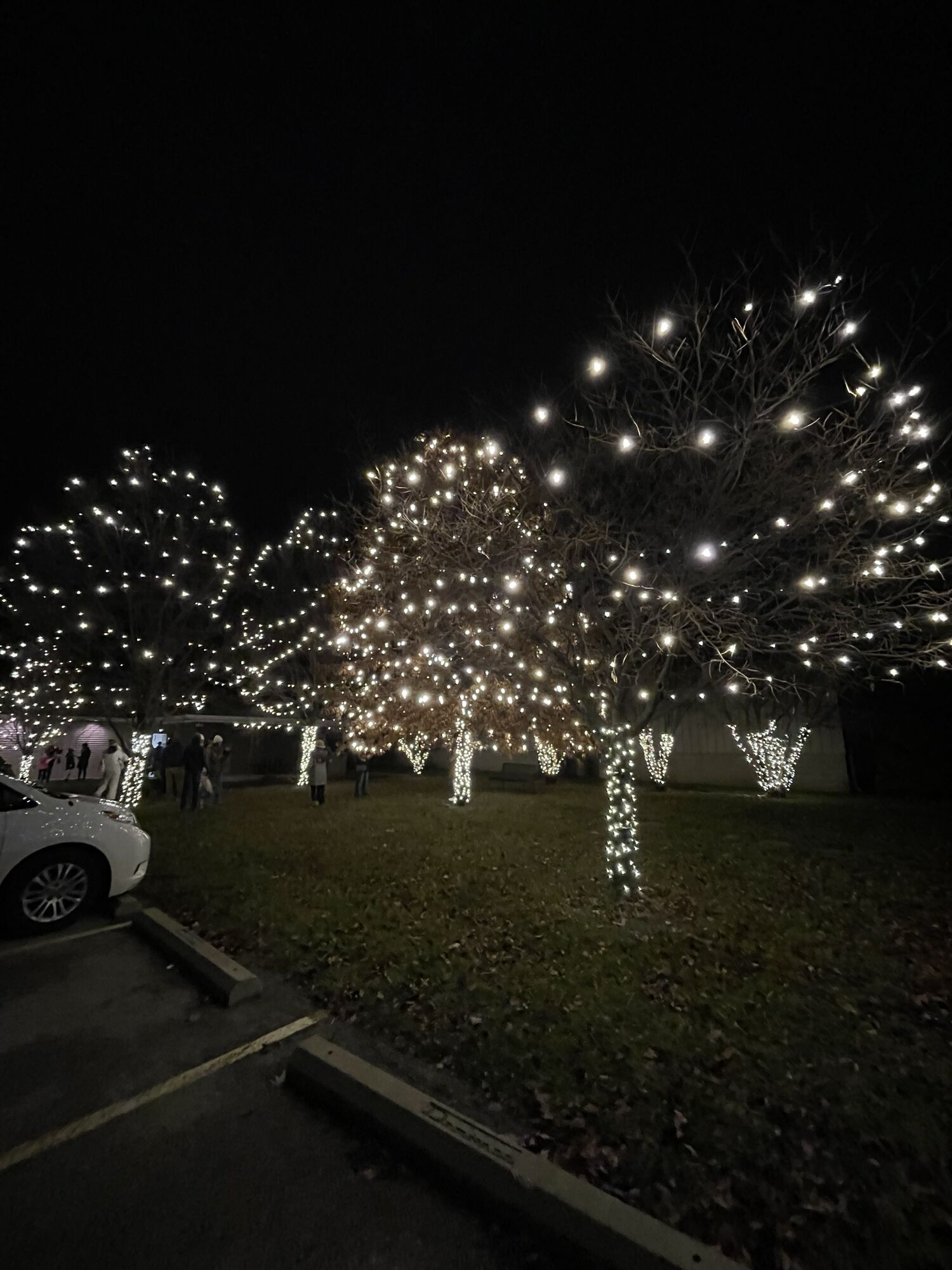
City halls, libraries, courthouses and parks are where a town's holiday season lives. They are also where the scale gets largest: rows of mature trees, wide lawns, long facades. The design principle is repetition. A row of trees each wrapped the same way is more powerful than one tree done elaborately, because the eye reads it as a place rather than an object. The grove in the photograph above is that idea, every trunk wrapped the same, and the effect is somewhere people want to walk through.
These projects also involve more people. A downtown association, a parks department or a church council usually has several opinions and a budget process. It helps to start the conversation early, ideally in late summer, so the design can be agreed and materials built before the autumn install season fills.
Working with the rest of the block
The best downtown displays are not one building. They are a row of buildings that agreed, formally or not, on a look. If three or four neighboring storefronts light their cornices in the same warm white, the street reads as one lit place rather than a scatter of separate efforts, and every business on it benefits, including the ones that did nothing.
Downtown associations and chambers of commerce are the natural place for that conversation, and a shared consultation for a block is often more efficient than several separate ones. Where a district wants a coordinated scheme, the design can be planned across buildings so that the trees, the cornices and the color accents line up down the street. It also makes the maintenance simpler, because one crew is looking after one block rather than several installers each looking after a piece of it.
The schedule is longer
Homes are lit from dusk to bedtime. Commercial displays usually run dusk to dawn, because the audience never entirely goes home: late shifts, early commuters, people driving through at two in the morning. The display should be on whenever there are eyes on the street. It is set on a timer at install and needs no attention from staff.
The season is often longer too. Many businesses want the display up for the start of holiday shopping in November and down after the first week of January, and some want lighting that stays useful into the new year. That is a conversation for the consultation, and the plan is built around it.
Maintenance matters more, not less
A dark strand on a house is a disappointment. A dark strand on a storefront is a message, and not the one you want to send. Commercial displays are seen by hundreds of people a night and any fault is noticed immediately. Maintenance through the season is included in every installation: one call and the crew comes out to fix the fault, check the rest of the display and confirm the timer. For a business that cannot spare a manager to think about lights in December, that is most of the point.
Safety, insurance and the sidewalk
Commercial work happens over public sidewalks, beside parked cars and on buildings that are taller than any house. The crew is licensed, insured and trained for exactly this, and the install is planned around the business: early mornings before opening, or hours when the sidewalk is quiet, so customers and staff are never working around a ladder. Cords across walkways are covered or routed away from foot traffic, and power is planned so the display never trips a breaker on a Saturday night in December.
Ask any lighting company you are considering to confirm all of that in writing. A business owner is responsible for what happens on their frontage, and the cheapest quote on Main Street is not a bargain if the installer is uninsured.
What it costs
Commercial displays are priced to the building, and the range is wide because buildings are. A single storefront with a lit cornice and a planter is a modest project. A church with a lit steeple, entrance and grounds is larger. A civic block with a row of wrapped trees is larger still. The design consultation is free, it produces a plan and a price, and it is the only way to get a real number for a real building. Full service pricing covers the design, installation, timer, maintenance through the season and removal and storage afterward.
What to Do Next
Walk your block at dusk this week and notice which buildings are lit and which are not, and how that changes the way the street feels. Then book a consultation while the install calendar is still open. Commercial projects need lead time for design and materials, and the businesses that look best in December are the ones that started the conversation in September.
Lit Up Taylor's Way designs, installs, maintains and removes holiday lighting for homes and businesses across Princeton, Peru, LaSalle, Ottawa, Mendota, Kewanee, Dixon, Peoria and the surrounding communities. Call 815-875-8231 or request your free consultation through the website.