What a Free Christmas Light Design Consultation Actually Covers
Lit Up Taylor's Way • September 18, 2026 • 8 min read
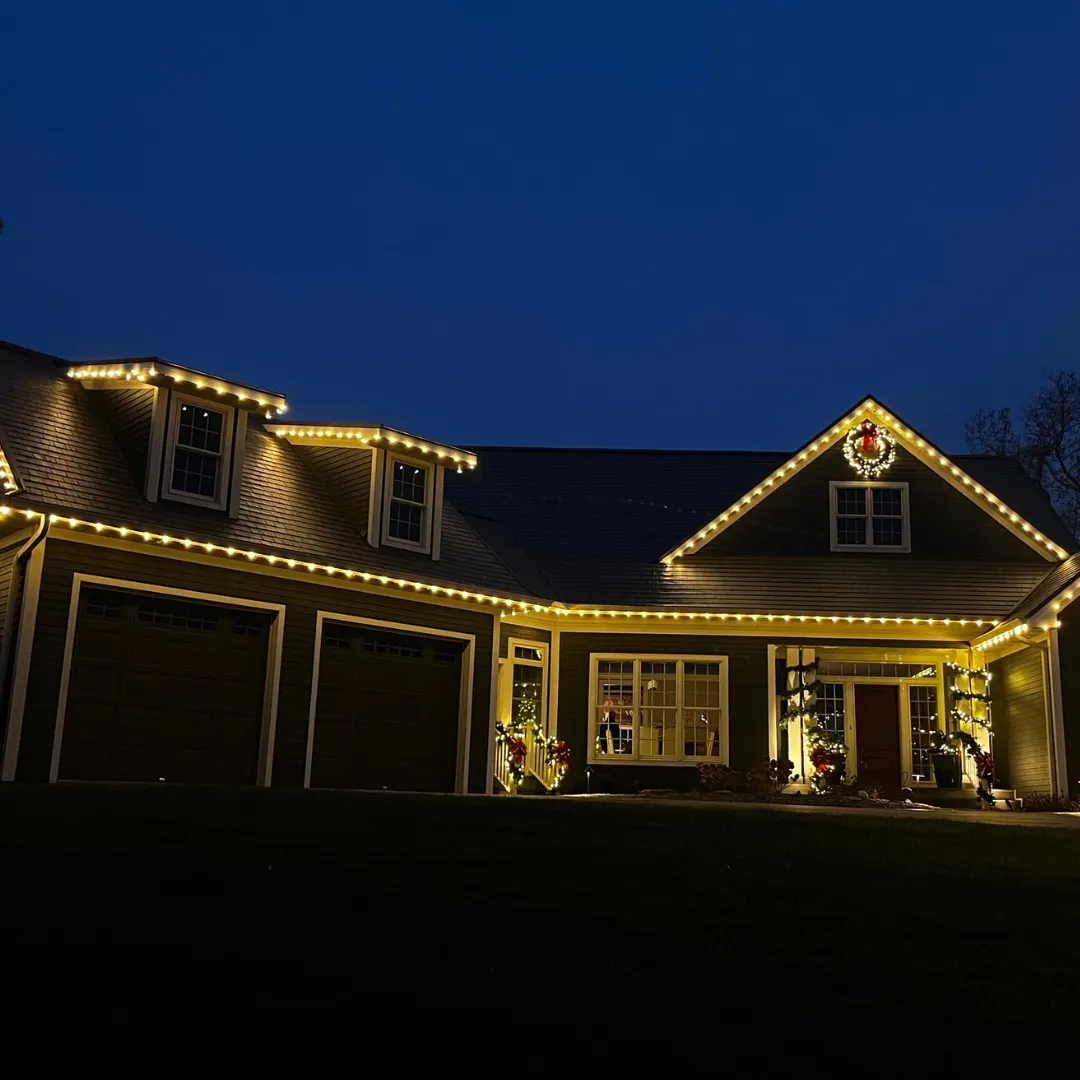
Most people picture a consultation as a sales visit, which is why a lot of them try to skip it and just ask for a price over the phone. That is understandable, and it is also the reason so many displays look like a string of lights was simply attached to a house. A number is easy to give. A design is not, and the design is what you are actually paying for.
Here is what the visit really involves, in the order it usually happens.
It starts from the road, not the front door
The first thing a designer does is stand where your neighbors and passing cars will stand. Almost every display is seen from the street, at night, at speed, and that changes what matters. Details that look important from your porch may be invisible from the road. A single clean line along the main roofline may do more than a dozen smaller touches around the door.
So the opening question is not what you want on the house. It is what you want somebody to see when they drive past. Some families want the whole silhouette of the home picked out. Some want one strong focal point and everything else quiet. Both are good answers, and they lead to completely different plans.
Reading the architecture
Every house has lines that were made to be lit and lines that were not. Gables, dormers, the edge of a porch roof, a run of columns, the arch over a front door: these carry light well because they already draw the eye. Long flat stretches of siding, gutters that sag, and rooflines broken up by vents and satellite dishes tend not to.
The designer is deciding which lines do the heavy lifting. On a ranch, that is usually the full length of the roofline, with the garage and the entry gable given their own outline so the house does not read as one long bar. On a two story home, it is often the upper roofline plus the porch, leaving the middle band of the house dark so the shape stays legible. Lighting everything is the most common mistake in the trade, because it flattens the house into a rectangle of dots.
Trees, shrubs and the ground plane
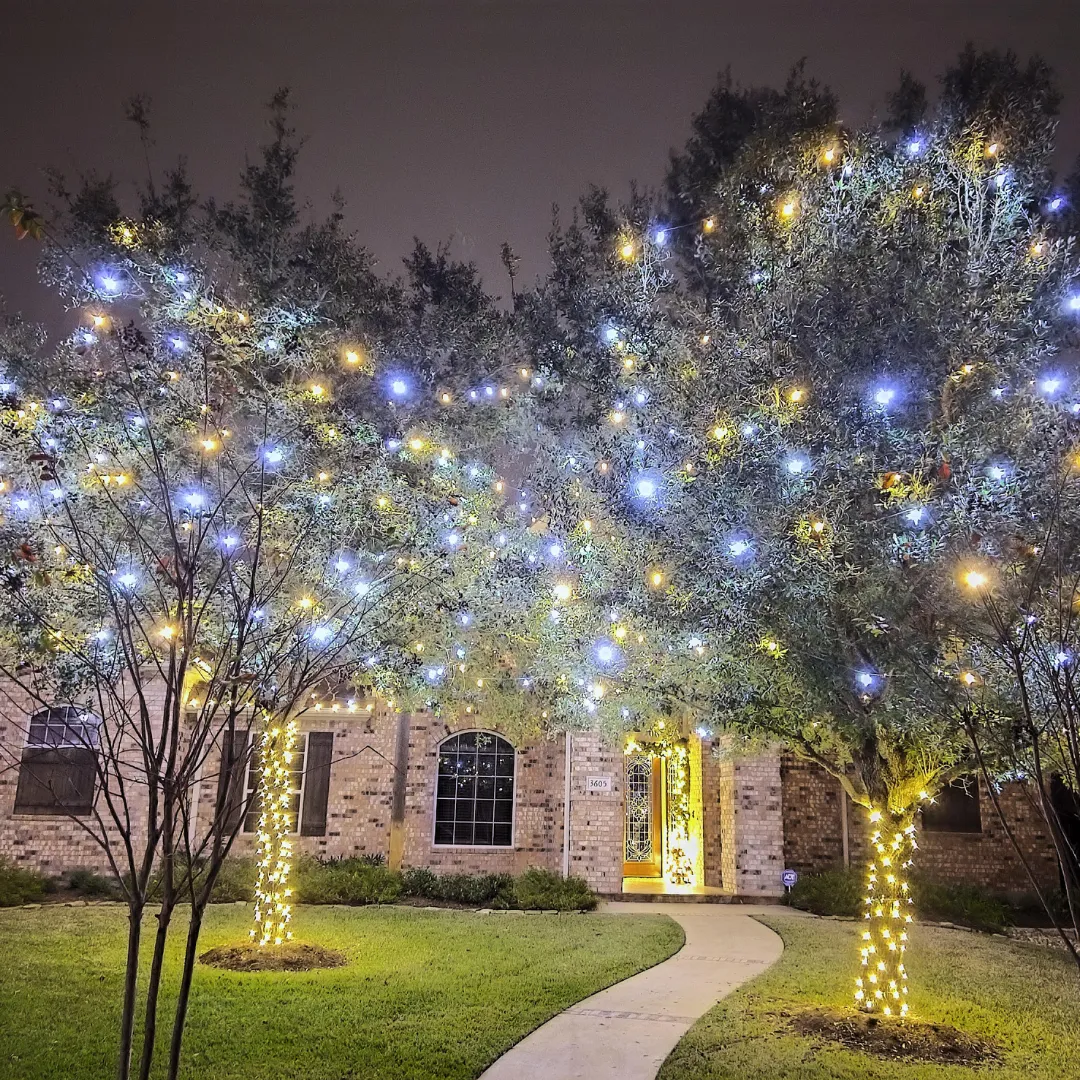
If there are trees worth wrapping, the conversation changes scale. A wrapped trunk and canopy is a different kind of object from a roofline, and one good tree can anchor an entire display. The designer is looking at trunk diameter, how high the first branches start, and whether the tree sits where it can be seen. A beautiful spruce hidden behind the garage is not worth the labor.
Shrubs and beds along the front are the ground plane. Lit evergreens beside the door, a wreath on the gable, garland on the porch posts: these give the display a base so it does not float above a dark yard. They are also where color tends to live if the roofline is kept warm white.
The questions you will be asked
Expect these five, roughly in this order.
- What do you want to see from the street? The whole house, one feature, or something in between.
- Warm white, color, or both? Most of our work is warm white on the structure with color used deliberately, but that is a preference, not a rule.
- Which trees and shrubs matter to you? Sometimes the answer is none. Sometimes it is the one tree you planted when the kids were small.
- When do you want the lights on and off? Every installation is set on a timer to your schedule, so this is decided now rather than remembered later.
- Is there anything you do not want? A neighbor's display you dislike is often the most useful reference in the whole conversation.
None of these have wrong answers. They exist so that the plan is yours rather than a template.
Power, timers and the practical part
Somewhere in the walk the designer is also solving a quieter problem: where the power comes from and where the timer lives. Outdoor outlets, their locations, and how many circuits are available decide how the runs are laid out. A display that trips a breaker on the coldest night of December is a design failure, not bad luck, and this is where it gets prevented.
The timer is set to your routine. Lights that come on at dusk and go off after you are asleep cost nothing extra to arrange, and they remove the only chore involved in having a display at all. You never flip a switch.
Why custom fit matters
Strands are cut and built to your roofline. That is the difference between a run that ends exactly at the corner and one that bunches, sags, or leaves a dark gap at the last foot. It is also why measuring happens at the consultation rather than on install day. The materials for your house are prepared before the crew arrives, which is part of why booking early produces a cleaner result.
What you leave with
Three things. A plan you can picture, described feature by feature. A price for that plan, with full service displays starting at $899, so you know what you are agreeing to before anything is ordered. And an install week that suits you, which matters more the closer we get to the season.
The plan covers the whole year, not just the day the lights go up. Installation, a timer set to your schedule, maintenance if a bulb fails or a storm rolls through, and removal and storage in January are all part of the same service. You are deciding once.
Mistakes the consultation catches
Over-lighting. Every gutter, every window, every shrub. It reads as noise from the road. The designer's job is often to take things away.
Matching the neighbors. A display that works on a colonial does not translate to a split level. The house you have is the brief.
Choosing color first. Color is the last decision, not the first. Structure and focal points come before palette, and once those are right the color question usually answers itself.
Forgetting the timer. A display you have to remember to turn on is a display that is dark half the nights of December.
Who should be there
Whoever will be looking at the display every evening. That sounds obvious, but a surprising number of consultations happen with one half of a couple, and the plan then has to be re-explained to the other half from memory. If two people have opinions about the house, it saves everyone time to have both of them on the walk.
It also helps to have a phone handy with any photos you have saved. A picture of a display you admired on a drive last December tells a designer more in five seconds than a paragraph of description. So does a photo of one you disliked.
Year two is easier
For returning customers the consultation is shorter, because the plan is already on file and the strands are already built to the house. The conversation becomes a review: what worked, what you would change, whether a tree has grown enough to be worth adding, whether the timer schedule still suits the household.
The one thing that does not carry over automatically is the install date. Returning customers who call in September keep their preferred week. Returning customers who call in December join the same queue as everyone else. The plan is remembered; the calendar is not.
Questions worth asking us
The consultation runs in both directions. The questions we hear most, and are happy to answer on the spot, are these. Who is on the crew and are they insured. What happens if a strand fails in the middle of December. When exactly the lights come down in January and where they are kept. Whether the price covers the whole season or just the install. Ask all of them. A company that cannot answer those clearly on your front lawn is not one you want on your roof.
What it costs
Nothing. The consultation is on us. You are not committing to anything by having someone look at the house, and the conversation is worth having even if you are still deciding whether this is the year.
What to Do Next
If you have been meaning to do this properly, the consultation is where it starts. Bring your ideas, or bring none at all and let us suggest something. Either way you will have a plan you can picture and a date on the calendar.
Lit Up Taylor's Way designs, installs, maintains and removes holiday lighting across Princeton, Peru, LaSalle, Ottawa, Mendota, Kewanee, Dixon, Peoria and the surrounding communities. Call 815-875-8231 or request your free consultation through the website.