The Real Cost of Hanging Your Own Christmas Lights: Ladders, Roofs and January Regret
Lit Up Taylor's Way • September 18, 2026 • 7 min read
Every autumn a version of the same conversation happens in driveways across Princeton, Peru and LaSalle. Somebody looks at the roofline, remembers the price of a professional installation, and decides that this is the year they will do it themselves. Sometimes it works out. More often, by the time January arrives, they have quietly decided that next year they will call someone.
This is not an argument that you cannot hang your own lights. Plenty of people do, and some of them enjoy it. It is an honest accounting of what the do it yourself route actually costs, because the number most people compare against is the wrong one.
The box is the cheap part
Retail strands are built to a price and to a season. They assume one use, a winter in a plastic tub, and replacement the following year. That is not a criticism; it is what they are for. But it means that the true cost of your lights is not one purchase. It is a purchase every year or two, plus the frustration of finding that a third of last year's strands no longer work when you open the tub.
Commercial grade product is built to be installed, removed, stored properly and installed again for years. The bulbs seat firmly, the wire tolerates cold without going brittle, and the connections survive being handled repeatedly. It also looks consistent, which matters more than people expect. A roofline where sections were replaced in different years shows three slightly different shades of white. A professional display does not.
Your time, priced honestly
A roofline install on an ordinary two story home is not an afternoon. It is measuring, buying, discovering you are short by a strand, going back, untangling, testing, clipping, adjusting, and doing most of that on a ladder. For a house with trees, garland and any kind of color plan, it is a weekend, and often two.
People rarely count this because it is their own time. But November weekends in north central Illinois are short, cold and scarce. The question is not whether you could spend them on the roof. It is whether you want to.
The ladder problem
Here is the part worth taking seriously. Roofline lighting means working at height, on a ladder, in weather that is getting colder and wetter by the week. It means leaning out to reach a gable, standing on a pitched roof to clip a run along a ridge, and doing it with cold hands. Gutters are not handholds. Frost on a north facing roof does not always look like frost.
Our crews are licensed, insured and fully trained for exactly this work, and they do it every day of the season with the right equipment. The reason a homeowner should not be on a roof in late November is not that it is difficult. It is that the consequences of one bad step are wildly out of proportion to the money saved.
The December problem nobody plans for
Lights fail. A strand goes dark, a storm pulls a run loose, a squirrel takes an interest in a wire. When that happens in the second week of December, the do it yourself homeowner has two options: get back on the ladder in the worst weather of the season, or live with a dark section for the rest of the holidays.
Most people choose the dark section. It is the most common way a display that looked good on installation day ends up looking neglected by Christmas. With a professional installation, a bulb going out or a storm rolling through is one phone call, and the crew comes and makes the display whole again. You do not touch a thing.
The January problem everybody plans to ignore
Takedown is the job nobody wants. The lights have done their work, the weather is at its worst, and the motivation that got you up the ladder in November has gone. So the lights stay up. Into January, then February, and in some neighborhoods well into spring, which is its own kind of embarrassment.
Then there is storage. Strands wound loosely into a tub tangle, kink and break, which is why so many are dead the following year. Proper storage is part of why commercial product lasts, and it is part of a professional service. When the season ends, the crew comes back, takes everything down, and stores it safely until next year.
Adding it up
Set the two options side by side honestly.
- Doing it yourself: the strands, replaced every year or two; at least one weekend, often two, in cold weather; the ladder and the risk that comes with it; repairs in December or a dark section for the season; a takedown that drags into the new year; and a display that looks like a string of lights attached to a house.
- Professional installation: a design consultation that is free; custom fit strands built to your roofline; installation by a licensed, insured, trained crew in the mild part of the season; a timer set to your schedule; maintenance on one phone call; and removal and storage in January. Full service displays start at $899.
Neither option is free. One of them costs money. The other costs weekends, risk, and the small daily irritation of a display that is never quite right. Which of those is more expensive depends on how you value your time, but the comparison should at least be made with the real numbers on both sides.
What install day looks like from the driveway
It is worth describing, because it is the thing people are actually buying. The crew arrives with strands already cut to your roofline from the measurements taken at the consultation. Nobody is guessing lengths on the lawn. Clips go on the shingle edge or gutter, not nails or staples, so nothing is left behind in January. Runs are tested before the ladder comes down, not after.
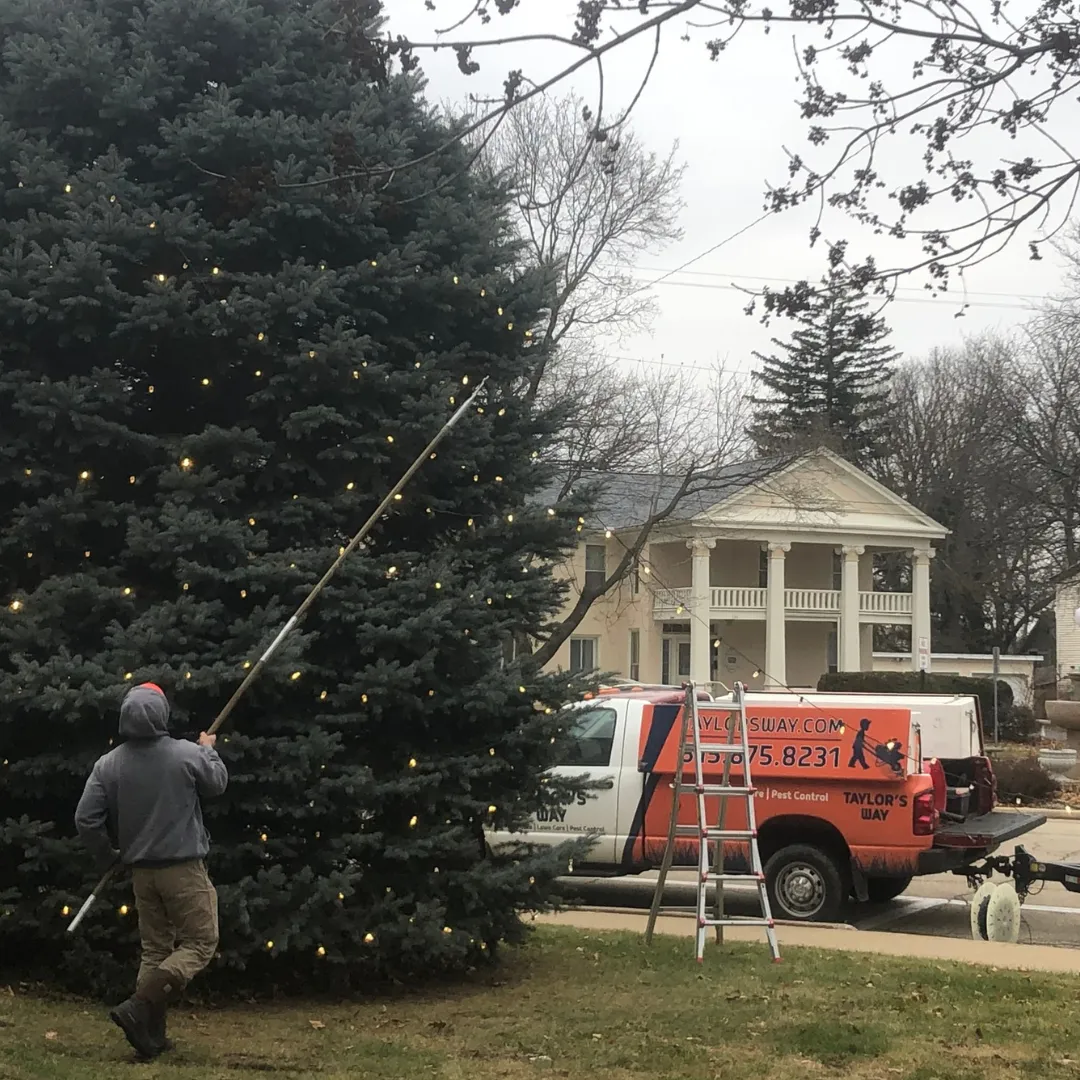
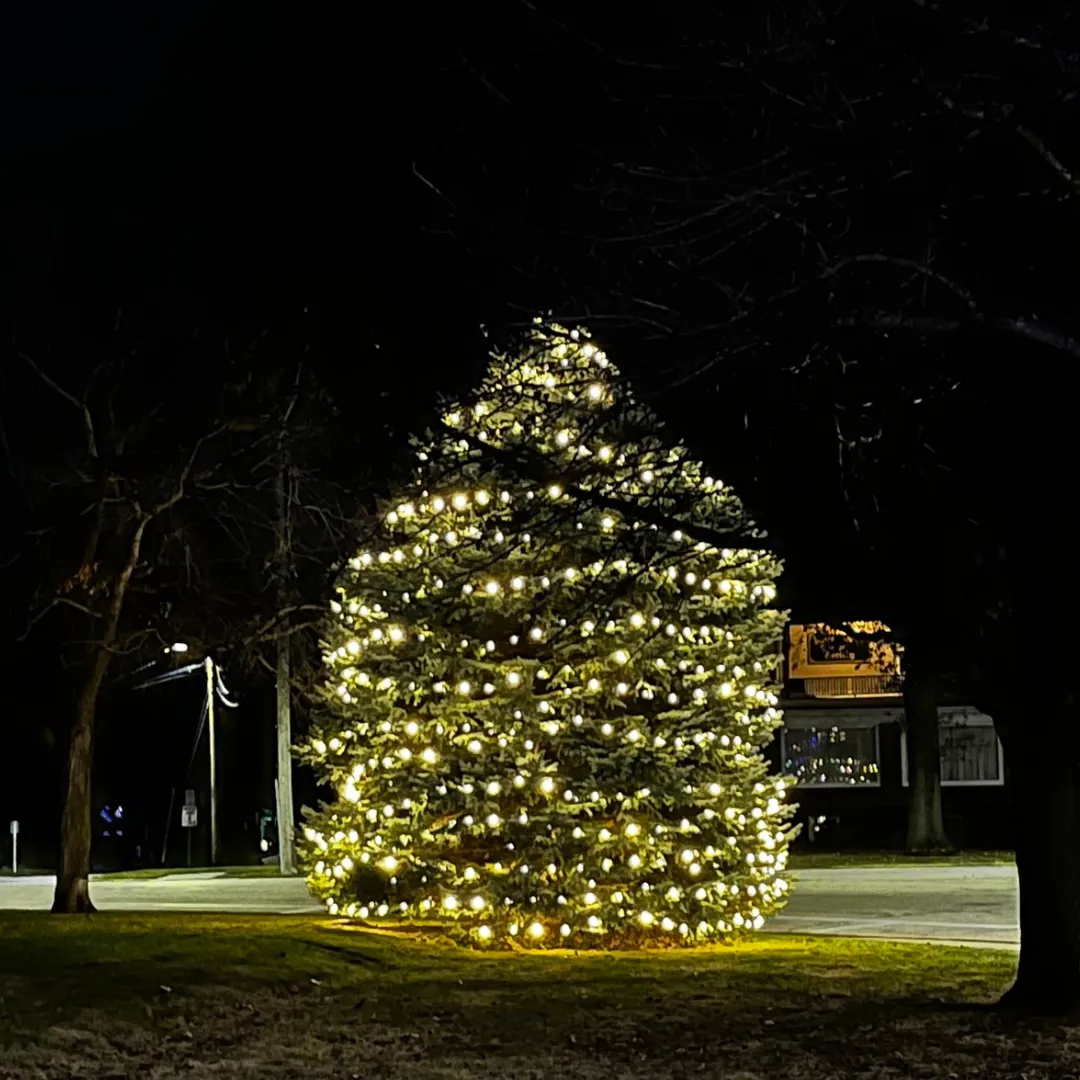
Trees are wrapped with long poles from the ground wherever that is possible, which is faster, safer and gives a more even result than climbing. The timer is set before the crew leaves, to the schedule you chose, and the display simply comes on at dusk. For most homes it is finished the same day, and the only thing you notice is that the house looks right that evening.
Why displays age badly
A do it yourself display looks its best in the first hour after it is finished. From that moment it is being pulled at by wind, loaded with ice, and slowly losing bulbs. By Christmas week the roofline has a sag in it, one gable is dark, and a strand that came loose in a storm is hanging in a loop nobody has had the heart to fix.
Professional displays are built not to do that. Custom fit strands do not have the slack that lets wind work them loose. Commercial grade connections hold in cold. And when something does fail, the maintenance visit puts it right instead of leaving it for the season. The display in the second week of December looks like the display on install day, and that consistency is most of what people are describing when they say a house looks professionally done.
Where doing it yourself still makes sense
A single story home with a low, simple roofline and no trees is a manageable job for a careful person with a good ladder and dry weather. Interior lights, a wreath on the door, lights on a small shrub by the step: these are pleasant weekend tasks, not risks. If that describes your house and you enjoy the work, there is no reason to change.
The calculation shifts when the roofline gets high, the house has multiple gables, there are trees worth wrapping, or you want the display to switch on by itself and stay lit through the whole season without your attention. That is where a professional service earns its price.
What to Do Next
If you are weighing the two options, start with a consultation. It costs nothing, it takes long enough to look at the house properly, and you will come away with a real price to compare against a real estimate of your own time. Most people find the comparison easier once both numbers are in front of them.
Lit Up Taylor's Way designs, installs, maintains and removes holiday lighting across Princeton, Peru, LaSalle, Ottawa, Mendota, Kewanee, Dixon, Peoria and the surrounding communities. Call 815-875-8231 or request a quote through the website, and leave the ladder in the garage this year.