Winter Landscape Care Tips
By Taylor's Way | Dec 15, 2022
Winter is a great time to prune deciduous trees and shrubs, maintain your tools, and protect your landscape from snow, ice, and salt damage. Here's everything you need to know to keep your yard healthy through the cold season.
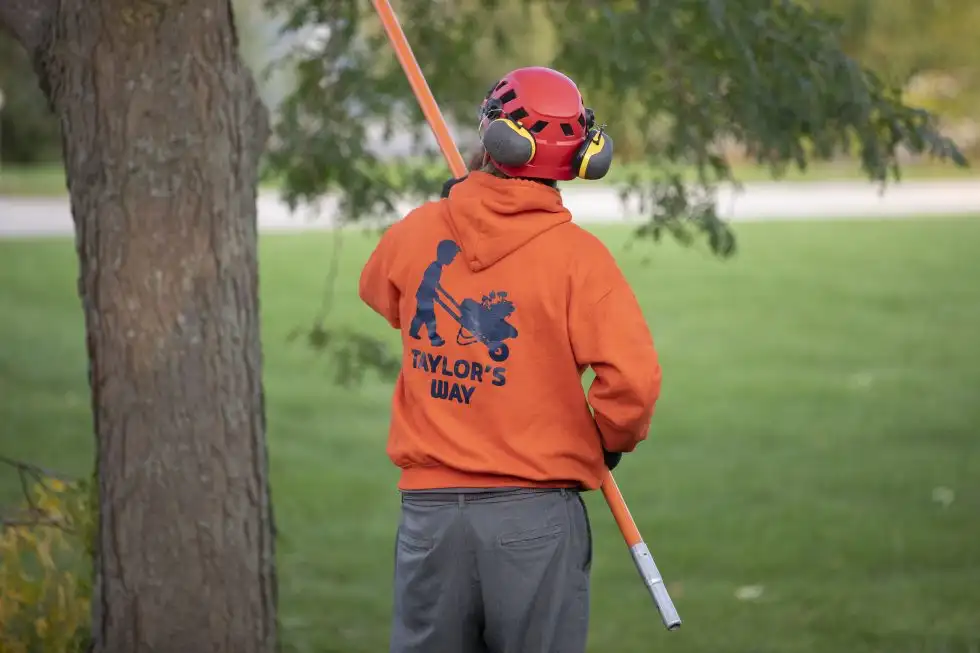
Winter Pruning of Deciduous Trees & Shrubs
Winter is a great time to prune most deciduous trees and shrubs. Complete pruning — thinning, correcting branch structure, and removing dead and diseased wood — can be done to plants where flower blooms are not a critical factor. For ornamentals planted for their showy flowers, it's best to wait until just after bloom to do extensive pruning, but dead and diseased wood, structural correction, suckers, and water sprouts can be removed in winter. Evergreens and conifers, however, should be pruned during the growing season to avoid winter injury.
Because deciduous trees and shrubs lose their leaves in winter, it's an ideal time to prune for proper branch structure. Dead wood is usually obvious when leaves are on the trees, but in winter it may be more difficult to discern deadwood from live. Broken or diseased wood may hold on to dead leaves even after the rest of the tree has shed for the season. The presence of fungus and lack of bark are also indications that a branch is dead.
If you're unsure if a branch is dead, gently scrape the outer layer of bark off a small twig and check for a green layer just below the surface. Live branches will also be pliable and bend rather than snapping. Giving the suspected dead branch a vigorous shake can be an easy way to locate deadwood, especially in shrubs and small trees.
Deadwood Removal in Spirea
Spirea can often accumulate a lot of dead branches in the interior and underside of the plant. One highly efficient method for removing deadwood in spirea is to first trim the plant back to 12–24"; this should leave the spirea looking like a porcupine. Next, while wearing sturdy boots or shoes, give the 'porcupine' a few short but firm kicks at the base of the plant. The dead branches will snap or loosen while the live branches will give and flex. Now all that needs to be done is to remove the dead branches with a spring or shrub rake or remove them with your hands (gloves are recommended).
Winter Dormant Trimming
Wintertime gives us an opportunity to catch up on some landscape chores. Oaks, Elms, ornamental Pears, and orchard trees should be pruned in winter to take advantage of the lower risk of spreading disease. Hydrangeas, weigelia, Russian sage, roses, and other summer and fall flowering shrubs can be pruned in winter as well, though some less-hardy shrubs might be better off waiting until just after budbreak in spring.
Proper Pruning Technique
All cuts should minimize the exposed cross-section and limbs should be cut perpendicular to themselves, to within ¼" of the branch collar. Start by pruning out dead wood, water sprouts, and suckers. Then prune rubbing and crossing branches. The goal is to open up branch structure for airflow. Be conservative — aim to prune only about 25% of the canopy in a season.
Water Sprouts & Suckers
Water sprouts are rapidly growing vertical growth from the trunk or horizontal branches, common on ornamental pears, crabapples, and fruit trees. Suckers form at the base of trees and are very common on grafted trees or trees that have had a major stress event such as loss of a major limb, trunk damage, or heavy insect or disease damage.
Protecting Plants from Snow & Ice
Snow Loading
Some conifers such as Arborvitaes are especially prone to snow loading resulting in broken branches and a ruined form. To prevent damage, vertical trunks can be tied together temporarily with nylon stockings, cotton rope, or specialty rubber tree chain. Shake off excess snow after heavy snowfall and let ice melt off naturally.
Ice Damage Prevention
For plants sensitive to ice damage such as boxwoods, make sure gutters are clean to avoid melting ice and snow freezing on plants. In certain circumstances it may be useful to cover plants loosely with burlap or a shade cloth to prevent ice buildup.
Keep Salt Away From Your Plants!
Winter storms mean dealing with ice accumulation on roadways, driveways, and sidewalks. These surfaces are often adjacent to lawns and landscape beds, putting them at risk from salt damage. Whenever possible, avoid the use of ice melts or salts in these areas. Remove as much snow and ice by shoveling if possible.
Avoid Rock Salt
The use of rock salt (Sodium Chloride) should be avoided or used sparingly. Use alternatives such as calcium chloride or magnesium chloride, which have lower effective temperature ranges and are less harmful to plants.
Anti-Skid Alternatives
Sand or kitty litter can be used as an anti-skid material as an alternative to ice melts if icing is minimal. These options pose no chemical risk to adjacent turf or landscape plants.
Salt Damage Recovery
Salt builds up and may ruin soil structure over time. In turf areas, regular aeration and the use of gypsum can help with compaction. In extreme cases, contaminated soil may need to be removed and replaced, addressing any underlying drainage issues at the same time.
Maintaining Your Garden Tools
Wintertime is also a great time for maintaining and sharpening your garden tools. We often use and abuse our tools during the growing season, never quite finding the time to keep things in top condition.
Shovels & Spades
Clean tools, remove rust, sharpen points, sand handles to remove splinters, and oil surfaces to prevent rust and preserve the wood.
Pruners & Loppers
Avoid grinding wheels which overheat steel and ruin temper. Use a mill file to remove nicks. Keep a consistent bevel as close to the manufacturer's original as possible. Only sharpen the exterior face side of pruner blades.
Lubrication & Reassembly
After cleaning and sharpening, apply a dab of grease to the contact point and reassemble. Use spray lubricant to coat exposed metal surfaces and wipe off the excess to protect against rust.
Indoor Activity: Learn About Native Trees This Winter
If you're stuck indoors and looking for something fun to do this winter, The Morton Arboretum has many self-paced e-learning modules about native trees and plants. Be sure to check out The Morton Arboretum Tree Collection module — registration is free!