Unearthing the Truth: Moles vs. Voles and How to Manage Them
by Taylor's Way | Apr 1, 2024 | Blog
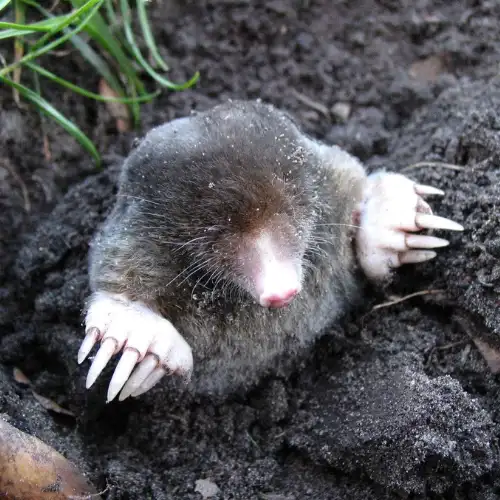
The unexpected climate shifts—last year's drought followed by an early Spring and significant precipitation—have not only altered our landscapes but have also led to increased mole activity in our lawns. At Taylor's Way, while we offer baiting and Repellex treatments to manage these critters, we acknowledge that there's no foolproof solution. However, understanding the difference between moles and voles, and debunking common myths, can empower homeowners to take more effective actions toward managing their presence.
Moles vs. Voles: Know Your Foe
Though often confused for one another, moles and voles have distinct habits and impacts on your garden and lawn.
Moles
Moles are solitary creatures that live underground, rarely seen by homeowners. They're insectivores, primarily feeding on earthworms and grubs. The visible signs of their presence are mounds of soil and raised ridges across your lawn, resulting from their tunneling activities. These tunnels can disrupt root systems, indirectly harming plants.
Voles
Voles are small rodents that resemble mice. Unlike moles, voles eat plants as well as insects and can cause significant damage to grass, perennial plants' roots, and bulbs. They create numerous shallow tunnels and paths in the lawn and are more likely to be seen by homeowners.
Did You Know? Mole Facts
Year-Round Activity
Moles do not hibernate — they eat and tunnel all year long.
Massive Appetite
A mole needs to consume 85% of its body weight daily and will consume 45–50 pounds of earthworms per year. Earthworms are their main diet.
Reproduction
They reproduce 2–6 young in the spring.
Speed & Depth
They can dig nearly 18 feet of surface tunnels per hour and travel 80 feet in one minute. Subsurface tunnels can be as much as 5 feet beneath the surface.
Effective Management Strategies
For Moles
Baiting
Mimics their natural food source and can be an effective way to manage their population. Target travel runs — long, straight runs moles use to get around their territory — for best results. Moles are more likely to re-use this type of run, leading to higher success rates.
Traps
Use press down spike or scissor traps to control moles by placing traps in travel runs.
Repellex
A treatment that makes their food source unpalatable, encouraging moles to move elsewhere.
⚠️ Many people believe that DIY mole control remedies are worth trying. The problem is that not only are these methods ineffective, but some are outright dangerous! Applying gasoline or vehicle exhaust to affected areas, inserting chewing gum or glass into tunnels, or using pinwheels to cause underground vibrations are not effective. The most effective method is installing a system of baits, traps, and repellents that are continuously monitored.
Myth-Busting Moles
Myth 1: Moles Eat Plant Roots
Moles are insectivores focused on earthworms. Damage to plants is collateral from tunneling. Voles, however, will feed on the fleshy roots of plants such as Daylilies and Hostas, causing serious injury or death.
Myth 2: All Tunneling is Moles
Not all lawn damage is caused by moles. Voles, which eat plant material, create burrows and pathways that can be mistaken for mole activity.
Myth 3: Moles are Nocturnal
Moles can be active at any time of day and are often more active during wet periods, regardless of the time.
Myth 4: Killing Grubs Will Get Rid of Moles
While grubs are a food source, grub killer products won't guarantee a mole-free landscape. They have no effect on earthworms — the mole's primary food source — so hungry moles will still find plenty to eat.
In Conclusion
Understanding the differences between moles and voles is crucial for effective lawn and garden management. While our services at Taylor's Way — like baiting and Repellex treatments — provide avenues for management, identifying the specific culprit and employing targeted strategies can lead to better outcomes. A balanced approach, combining physical, chemical, and cultural methods, often yields the best results in managing these critters and keeping your outdoor spaces healthy and beautiful.
Get Expert Help from Taylor's Way
For more tips on lawn care and managing wildlife in your garden, contact our office today.