April Showers Bring May Flowers… and Weeds
by Taylor's Way | May 2, 2023 | Blog
After the rains, spring bursts with Tulips, Azaleas, Cherry Blossoms, and Dogwood Trees — but along with that new life comes the dreaded perennials: weeds. The best way to combat the war on weeds is with pre-emergent herbicide, but what do you do if you missed those applications? Weeds can remain dormant for months, even years, until moisture and warm weather create the ideal conditions for dandelions, crabgrass, nimbleweed, red thread, and more.
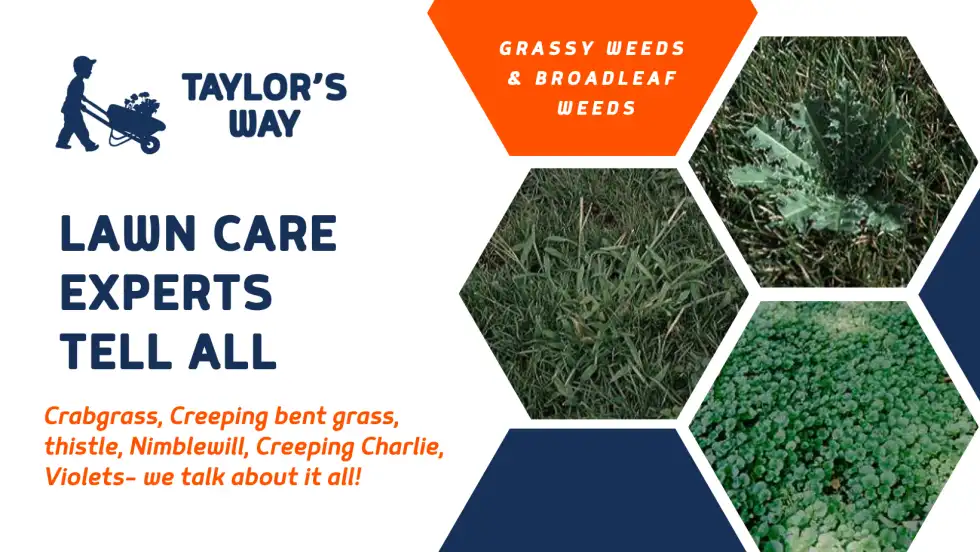
Perennial & Annual Grassy Weeds
Northern & Central Illinois perennial grassy weeds are considered the most difficult weed problems to deal with in lawns. Control options are limited because the weed species are very similar to the lawn species. Many perennial grassy weeds are not considered weeds at all when growing under a different set of conditions.
Tall Fescue
More coarse and grows in distinctive clumps when it occurs with Kentucky bluegrass, making it an unwanted weed in that context.
Creeping Bentgrass
Desirable on golf courses, but appears as patches of finer, lighter-colored grass when growing in bluegrass lawns — considered a weed in that setting.
Zoysiagrass
A warm-season turf species that appears as patches of thick, straw-colored (dormant) grass in cool-season Kentucky bluegrass lawns during spring and fall.
One way to distinguish perennial grasses from annuals: perennials (other than nimblewill and zoysiagrass) appear as established green grasses early in spring, whereas most annual grasses like crabgrass don't appear until late spring or early summer.
What Do You Do With These Grassy Weeds?
Hand Removal
Removing creeping grasses like Nimblewill & Creeping Bentgrass by hand is one option. It's vital to get all of the plant — rhizomes and stolons enable these species to spread readily and regrow if broken or cut. After removal, seed the area and keep it watered.
Selective Chemical Control
Selective chemical control is not an option for most perennial grassy weeds. Nonselective herbicides like glyphosate can spot-treat patches of undesirable species. After weeds and affected lawn die, reseed with desirable grass species.
Lawn Renovation
For widespread infestations, renovation is the preferred route. When in doubt, a Taylor's Way Lawn Care Expert will be happy to assess your options and recommend the best course of action.
Crabgrass: What You Need to Know
Around this time of year, many calls come in from people who think they're seeing crabgrass — but it can often be confused with another grassy weed like tall fescue. Crabgrass typically begins germinating in the late weeks of May and into June, all temperature dependent.
Germination Conditions
Crabgrass germinates when soil temperatures exceed 55–60°F for 7–10 consecutive days and continues until soils reach 95°F. Other annual grasses germinate as soils get warmer than 60°F.
Pre-Emergent Timing
Preemergence herbicides must be applied before crabgrass emerges from the soil. All existing clients on our fertilizer & preemergence program have already received these applications.
Broadleaf Weed Control
Our standard lawn programs include 2 rounds of broadleaf weed control: one end of April through May into early June, and a second beginning in August through end of October.
Nutsedge: A Problematic Summer Weed
Nutsedge often emerges in early to late summer, and earlier in landscape beds. It is yellow-green in color with a rapid growth rate, outpacing the growth of your turfgrass. Nutsedge is not a grass but rather a sedge, requiring specialized selective control in the lawn.
It spreads by seed and vegetatively by nutlets and rhizomes underground. Seeds and nutlets can remain dormant in the soil for many years. Given the right conditions — heat and lots of rainfall — it can become aggressive in colonizing wet and compacted areas. Call our lawn experts if you think you may have Nutsedge so they can assess your situation and recommend a treatment plan.
What Encourages Grassy Weeds?
Weeds don't just pop up at random. Some weeds prefer certain types of soil, and their appearance is often a sign of a problem or weakness in your lawn.
Soil & Drainage Issues
Compacted soil, soil that stays wet, poor water drainage, dry soil, and problematic pH all give weeds an inroad into your lawn.
Mowing Too Low
Close-mowed lawns tend to open up, allowing weeds like crabgrass to invade. Keep mowing height around 3" to maintain a dense, healthy turf.
Light, Frequent Watering
Light, frequent watering favors crabgrass. Crabgrass often invades areas seeded in late spring because of bare soil, frequent watering, and the onset of hot weather — all ideal for its growth.
Too Much or Too Little Fertility
Improper fertility and shady areas weaken turf and allow weeds to compete with grass plants for nutrients and water.
Broadleaf Weed Problems in Northern & Central Illinois
Identifying the weed and trying to determine why it has invaded is the first step in managing broadleaf weeds. Weeds can be indicators of underlying problems — for example, ground ivy invades lawns in the shade, while knotweed may indicate soil compaction.
Step 1: Identify & Diagnose
Identify the weeds present and determine why they have invaded. Assorted weeds may indicate poor lawn grass conditions and/or poor management practices.
Step 2: Review Lawn Care Practices
Review and adjust fertilization, watering, mowing, and establishment practices. Alter the environment favoring weeds — reduce shade by having an ISA Certified Arborist assess trees that may need thinning or trimming.
Violets: Special Treatment
Violets are broadleaf weeds that require specialized control. They require two consecutive applications in the fall for best control results.
What to Expect With Broadleaf Weed Control Applications
Uptake & Visibility
Uptake can happen within hours, but full control may not be visible for 7–10 days after application.
Mowing After Application
Do not mow the lawn for 24 hours after a broadleaf weed control application.
Rain Resistance
Applications are rain-fast within two hours and can withstand up to a half-inch of rain within that window.
No Results After 7–10 Days?
If you're not seeing control after 7–10 days, call our office and we will stop back out and re-apply at no cost to you.
Need Help With Weed Management?
Weed management can be a daunting and tedious task for the homeowner. Call Taylor's Way Lawn Experts to assist you with either one-time maintenance or to set up a maintenance schedule that gives you extra reinforcement.